Call Today for Your FREE Consultation
630-355-7776
650 Diehl Road, Suite 117, Naperville, IL 60563


- Home
- Attorneys
- Practice Areas
- Testimonials
- Articles
- Stages of Divorce
- 10 Tips for Surviving Divorce
- Why Divorce Litigation is Sometimes Necessary
- What You Need to Know About Spousal Maintenance
- Trend toward “gender reversal” in marriage affects divorce
- Increase in boomer divorces and the issues faced by older couples
- Questions You Should Ask Your Prospective Divorce Attorney
- Working With Your Spouse to Divide Marital Debt
- Blog
- Contact Us
How Can I Ensure My Separate Property Is Not Divided in the Divorce?
 In the midst of a divorce, you may worry that you will lose your separate property. This is a reasonable concern to have. After all, Illinois is an equitable distribution state, so marital property is divided fairly between the spouses no matter what. Separate property is not subject to division, but how can you be sure that your ex-spouse will not end up with your property?
Concerns about property division during divorce are common, and a skilled Naperville, IL family law attorney can represent you and advocate for your property rights. At the Law Office of Ronald L. Hendrix, P.C., we have decades of experience helping clients protect valuable assets during the divorce process. You can rely on us to provide you with straightforward legal advice and strong advocacy throughout your case.
What Qualifies as Separate Property in Illinois?
Illinois law is clear about what assets are set aside as separate property under 750 ILCS 5/503. These include:
-
Anything you owned before the marriage
-
Inheritances or gifts received by you alone when you were married
-
Property you acquired after a legal separation
-
Property that is excluded by a valid prenuptial or postnuptial agreement
-
Income from your separate property, assuming you keep it separate from marital funds
On the other hand, marital property includes the assets and debts acquired during the marriage. A piece of property can be considered marital even if it is only in one spouse’s name.
Three Ways to Protect Your Separate Property in 2026
Keep All Property Well-Documented
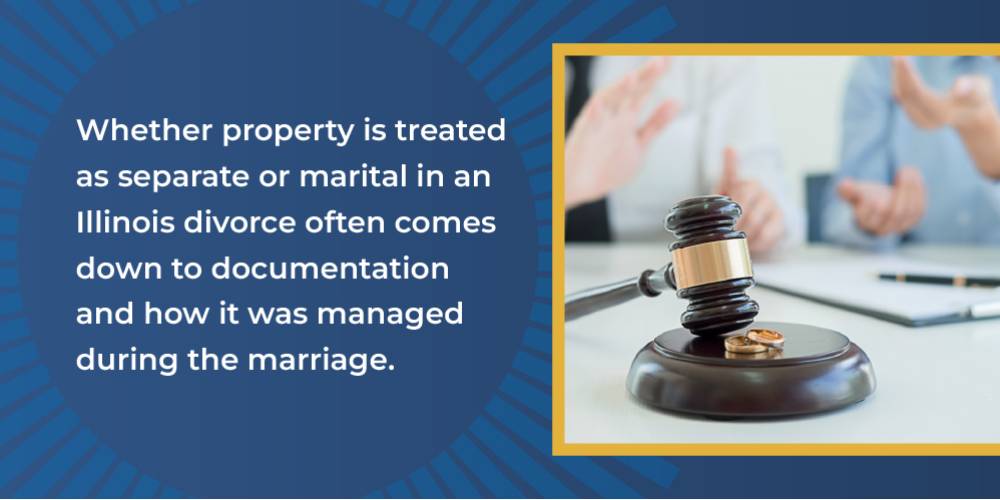
Proving your property is separate is essential for ensuring it stays yours after the divorce. Carefully maintain records and documents proving your separate property, including bank statements, deeds, and titles showing that you owned the property before marriage.
Do not deposit your separate income, such as rents or salaries, into joint bank accounts. If you use your separate money to purchase something during the marriage, such as a home, keep receipts proving that you bought it with your individual property.
Never Commingle Assets
Commingling happens when your separate property is combined with marital property, which can make it lose its separate status. To avoid doing this, make sure to keep your separate property in bank or investment accounts in your name only. If you use your funds to buy something during the marriage, keep financial records showing it came from your property.
You should also be wary of non-monetary contributions to separate property. If your spouse contributes personal effort to your property, he or she may have to be paid back through the marital estate.
Sign a Prenuptial Agreement
Many disagreements over property division in divorce can be avoided by signing a legally binding prenuptial agreement before the marriage. The prenup can designate which assets are separate property.
The prenuptial agreement must be in writing and signed by both spouses. It must also be entered into voluntarily by both parties and reflect financial disclosure on both sides.
Handling Disagreements About Separate Property in Your Divorce
Disagreements about separate property are very common in divorce. You may feel sure that an asset is yours alone. Your spouse may feel just as strongly that it is marital. This can lead to anger, hurt, and fear about the future.
The first step is to slow the conversation down. Pick one asset at a time and explain why you believe it is separate property. It might be a gift from a parent, money you had before marriage, or an inheritance in your name only.
Gathering proof often helps. You and your attorney can collect bank statements, deeds, gift letters, emails, and other records. Then you can share those documents during negotiations. Clear evidence can calm the discussion and make it less personal. It is easier for a spouse to accept a result that is backed up by proof, not just memory.
You can also use mediation or attorney-led negotiation. In mediation, a neutral person guides the conversation. The mediator does not take sides. The goal is to help you and your spouse come to an agreement, even if you see things very differently. In attorney-led talks, your lawyer speaks for you, explains your position, and pushes for a settlement that respects your separate property. Settling these issues outside of court usually saves time, money, and stress.
Should You Go to Trial to Protect Your Separate Property?
Sometimes, spouses cannot agree about the marital estate despite their best efforts. Your spouse may refuse to accept clear proof. He or she may demand a share of property that you strongly believe is separate. In that type of situation, a trial may be the only way to move forward.
At trial, your attorney can present documents, witness testimony, and legal arguments. The judge will listen to both sides and then decide whether an asset is separate or marital. This process allows you to fully argue for your rights. If you have strong evidence and a clear story, litigation can potentially help you protect an important inheritance, a premarital home, or other key assets.
However, a trial also has real drawbacks. Court hearings take time. You may have to wait months or even longer for a final decision. Trials are also expensive. Attorney fees, expert evaluations, and court costs can add up quickly. CNBC reports that contested divorces tend to cost significantly more than uncontested divorces, largely because trials are so complex.
Going to trial also means giving up control. The result may feel fair, or it may feel deeply disappointing. For that reason, it is often wise to treat trial as a last resort. You and your attorney can weigh the value of the disputed asset, the strength of your evidence, and the likely cost of trial. Then you can decide whether to keep negotiating, accept a compromise, or move forward with litigation to protect your separate property.
Contact a DuPage County, IL Property Division Attorney
Divorce is already stressful, but it can be exacerbated by concerns about potentially losing ownership of your property. An experienced Naperville, IL divorce lawyer from the Law Office of Ronald L. Hendrix, P.C. can stand up for your rights during asset division. Call 630-355-7776 to schedule your free legal consultation.










650 Diehl Road, Suite 117, Naperville, IL 60563


Contact Our Firm
 The use of the Internet or this form for communication with the firm or any individual member of the firm does not establish an attorney-client relationship. Confidential or time-sensitive information should not be sent through this form.
I have read and understand the Disclaimer and Privacy Policy.